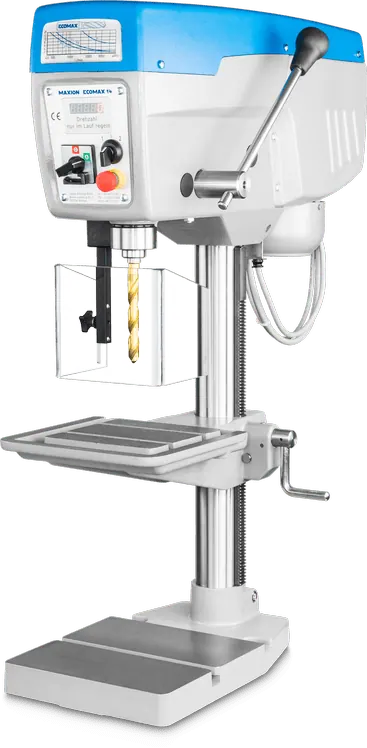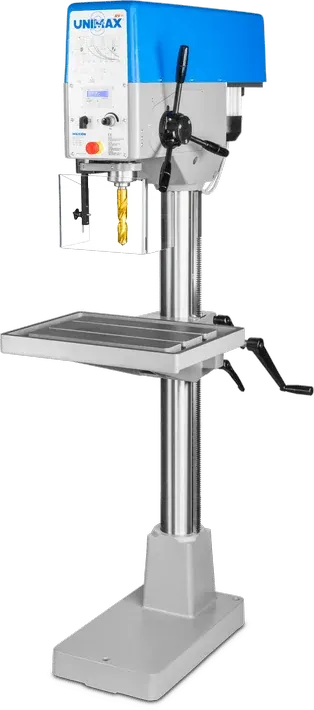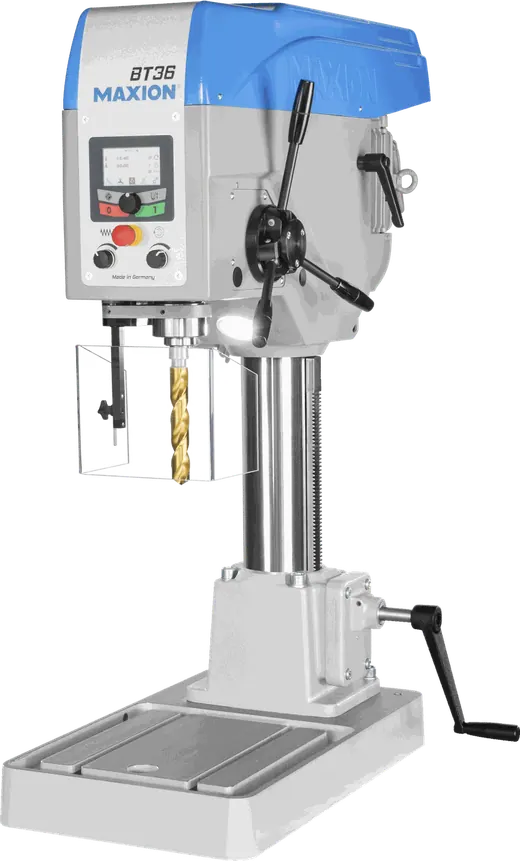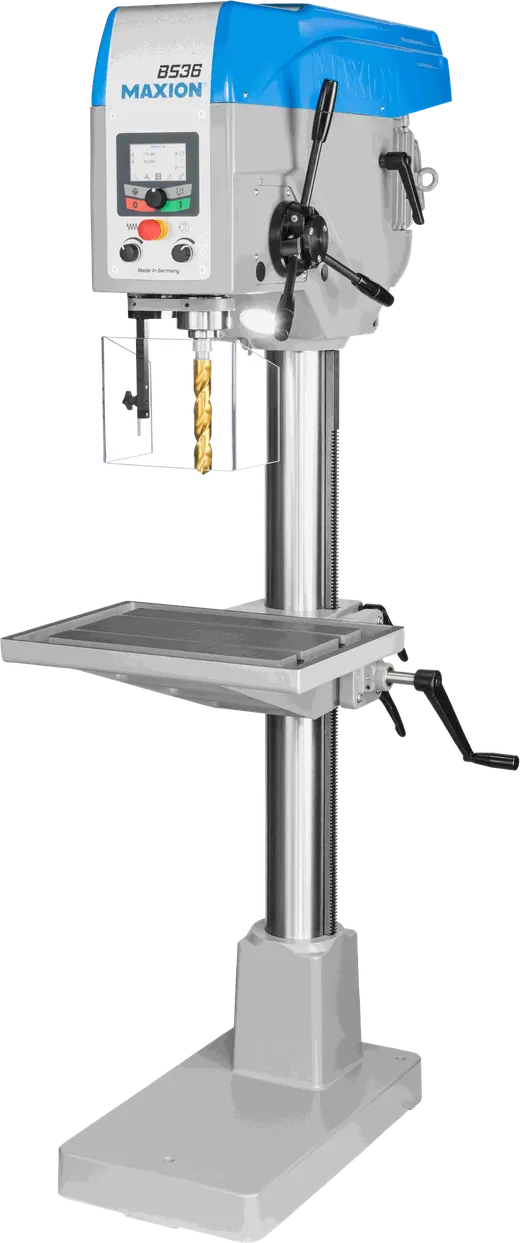
The 2M112 was the most widely produced metal-cutting machine in the USSR, and the 2N135 and 2A135 still stand in almost every repair shop. They are replaced not because of age: the spindle taper wears out, run-out appears, belts and bearings disappear, or a thread has to be cut and the machine simply cannot do it. Unlike lathes, drilling machines translate almost literally — the size ranges happen to line up.
What to take from the old data sheet
- Maximum drilling diameter — the main figure in the name: in the 2N135 and 2A135 the "35" is 35 mm in steel, in the 2M112 the "12" is 12 mm.
- Throat — the distance from the spindle axis to the column: 300 mm on the 2N135 and 2A135, 190 mm on the 2M112. It is not the drilling depth but how far from the edge of the part a hole can be placed.
- Spindle taper — Morse 4 on the 2N135. It decides whether your drilling tooling moves to the new machine without adapters.
- Power and speed — 4 kW and 31.5–1400 rpm in 12 steps on the 2N135; 4.5 kW and 68–1100 rpm in 9 steps on the 2A135; 0.55 kW on the 2M112.
Table: old machine to what to look for in the catalog
| Old machine | Drilling diameter | Throat | Power and speed | Closest in the catalog |
|---|---|---|---|---|
| 2M112 | 12 mm | 190 mm | 0.55 kW | MAXION ECOMAX 14 |
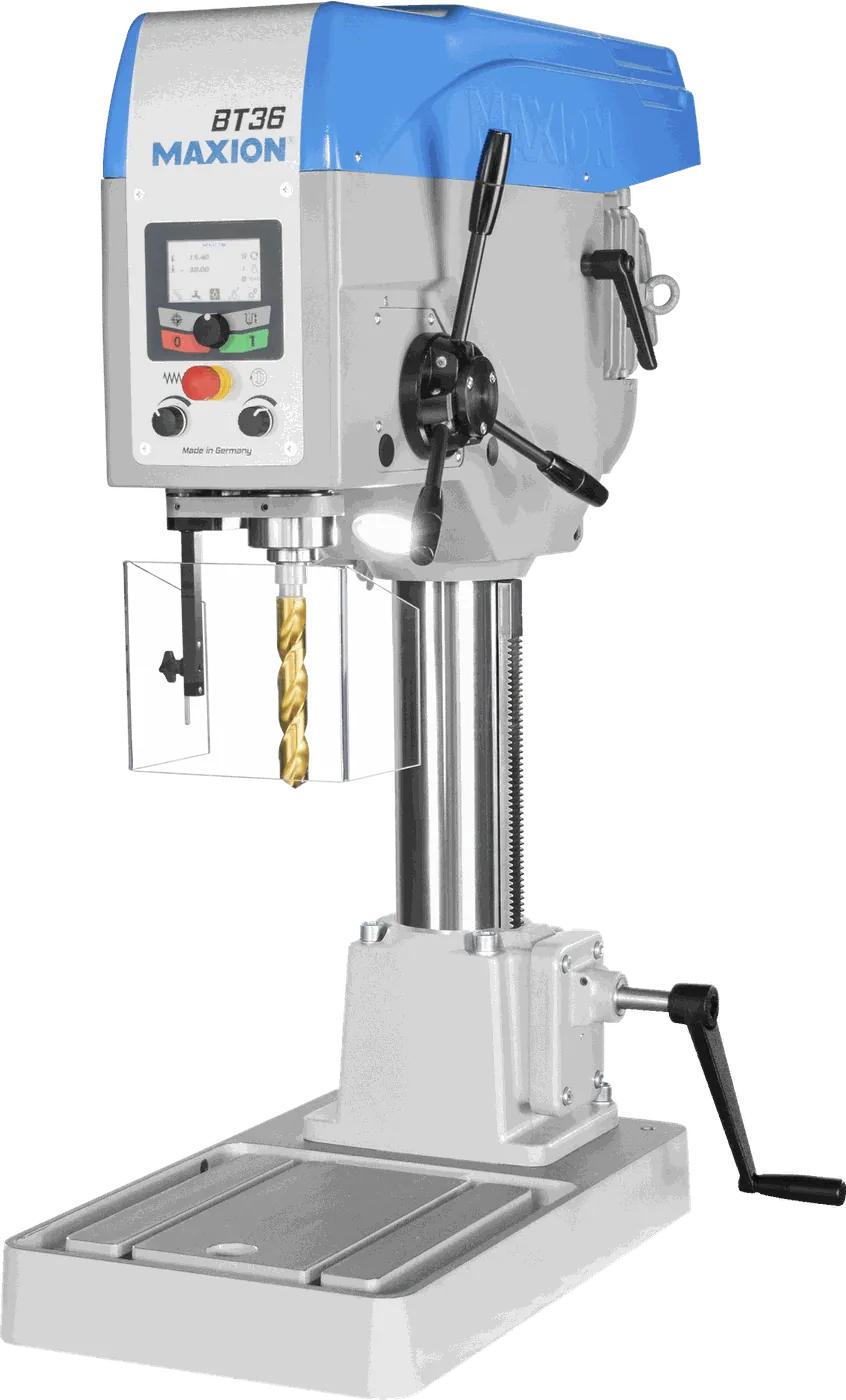
| 2A135 | 35 mm | 300 mm | 4.5 kW, 68–1100 rpm | MAXION BT 36 |
| 2N135 | 35 mm | 300 mm | 4 kW, 31.5–1400 rpm | MAXION BT 36 or BS 36 |
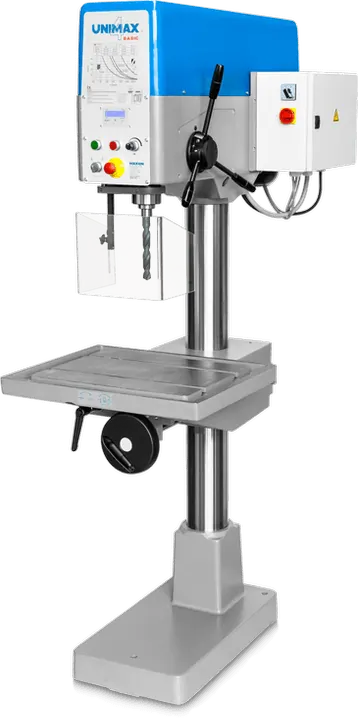
For the smaller Soviet machines of 25 and 32 mm the closest is the MAXION UNIMAX 3: 25 mm, a 260 mm throat and a Morse 3 taper. If more than 35 mm is needed, the same range holds the UNIMAX 4 at 40 mm and the BS 50 AVST at 50 mm. All the models are side by side in the bench and column drilling machine.
Why the 2N135 is the simplest case of all
The MAXION BT 36 drills 35 mm, has a 300 mm throat, a Morse 4 taper and 4 kW. That is four matches out of four: the 2N135 carries exactly the same numbers. Tooling on a Morse 4 taper — drills, chucks, reduction sleeves — moves to the new machine with no adapters and nothing extra to buy. Nowhere else in the catalog does a modern range land on the Soviet one this precisely.
Three differences people notice after the swap
- Speed and torque at the bottom end. The 2N135 has a 12-step gearbox from 31.5 rpm, while modern machines use a frequency drive with stepless control. The range is wider, but for a large diameter in steel what matters is not the range but the torque at low speed: that is the thing to confirm in the technical quotation for your largest hole.
- Thread cutting. A Soviet vertical drilling machine cut threads through a reversing chuck. On MAXION it is a rated function: the UNIMAX 3 goes up to M20, and for production threading there are separate tapping machines.
- When a vertical machine is no longer the answer. If the part is heavy and the holes are scattered, the time goes not into drilling but into moving the part under the spindle. On a radial drilling machine it is the other way round: the spindle travels to the hole. That is the second scenario, where a 2N135 is replaced not by its likeness but by a different type of machine.
What to check before the swap
- Your largest hole and the material. The rated 35 mm is in steel; in cast iron and stainless the figure is different.
- Tooling. List what you already have on Morse 4 or Morse 3: sometimes that alone decides which model to take.
- Throat against your widest part. A 300 mm throat means a hole can be placed no further than 300 mm from the edge on the column side.
- Thread cutting. If you need it regularly, it belongs in the selection as a requirement, not as a "we'll manage somehow" option.
- Supply and floor space. A bench machine goes on a workbench, a column machine on the floor with fixings; worth checking before delivery rather than after.
Equipment from the catalog