MEP
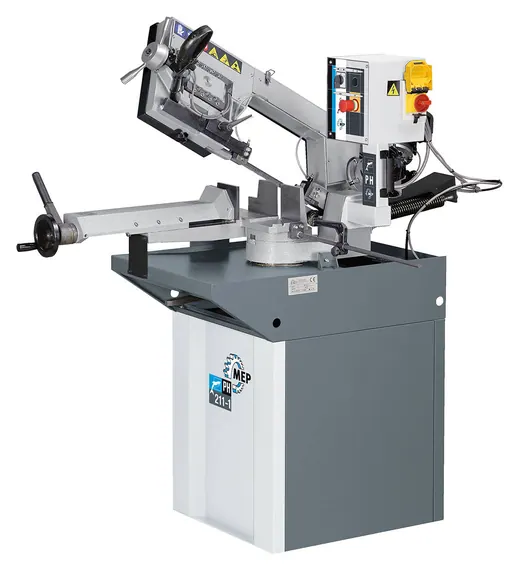
MEP PH 211-1/HB
Series: PHSaw type: Band typeOperating mode: Manual
PRICE ON REQUESTDetails →
MEP and BLM GROUP saws for bar, tube and profiles: manual, semi-automatic and automatic band saws, and circular saws for steel and aluminium.
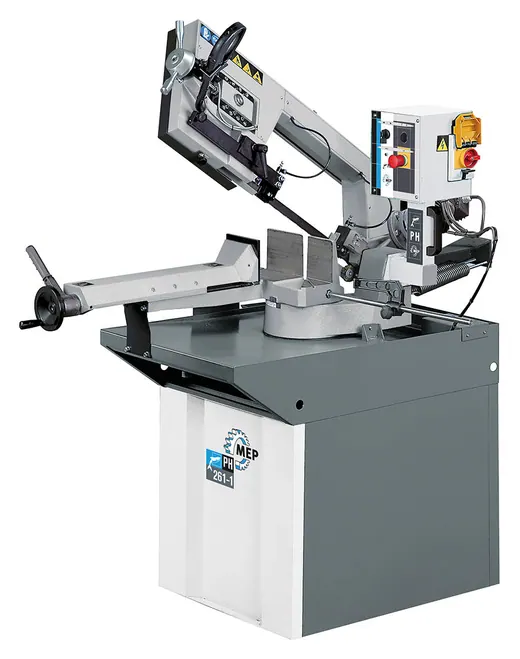
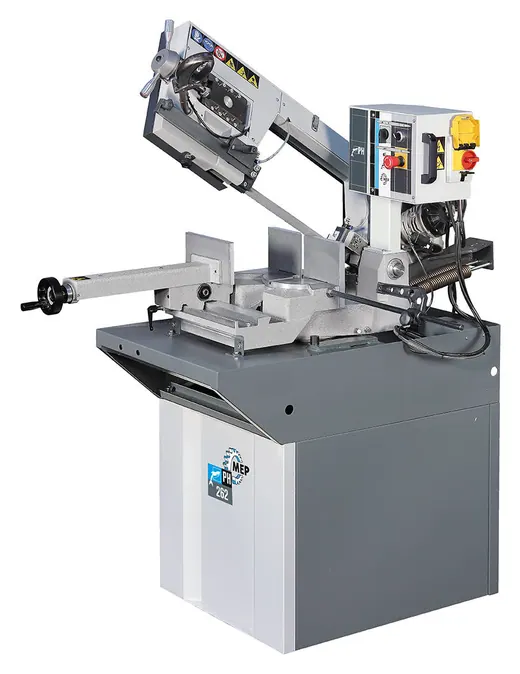
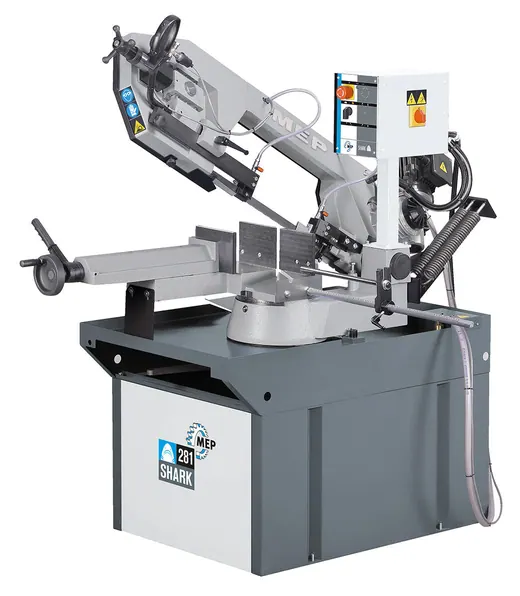
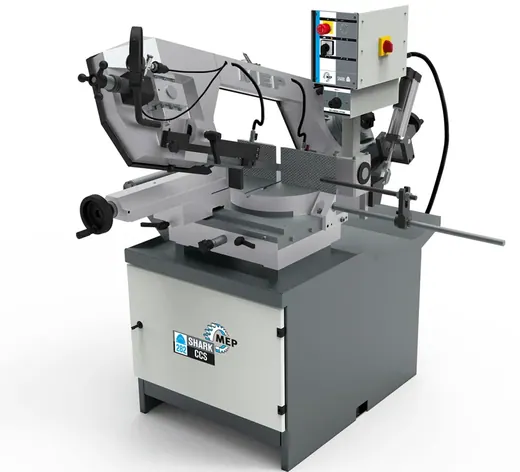
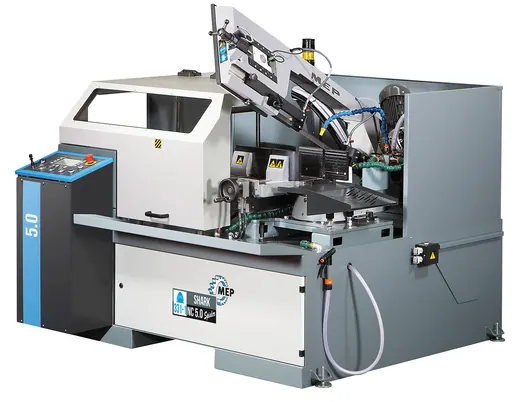
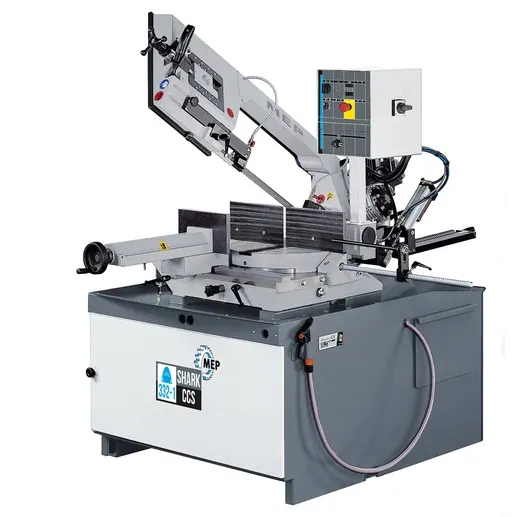
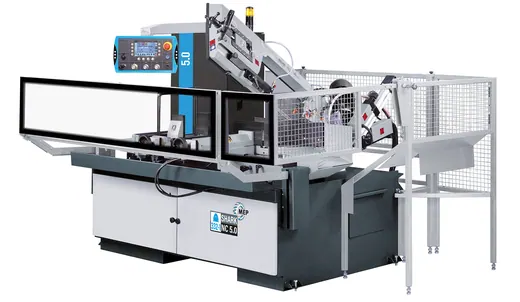
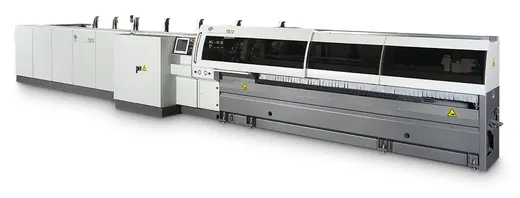
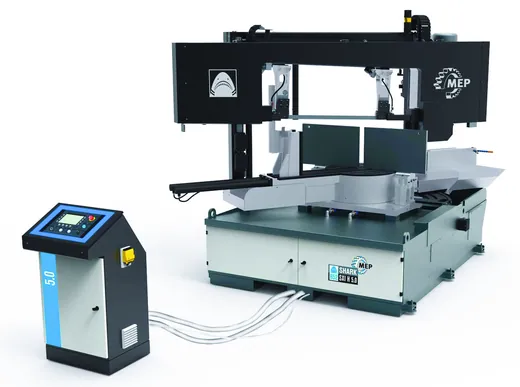
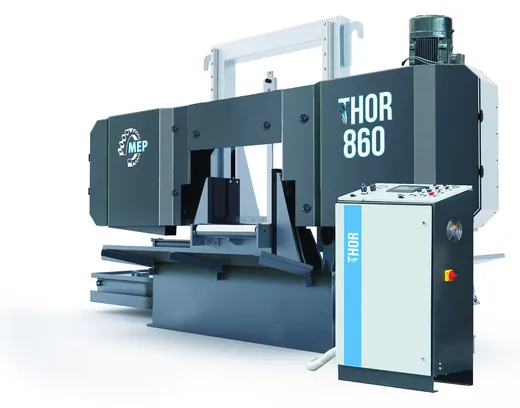
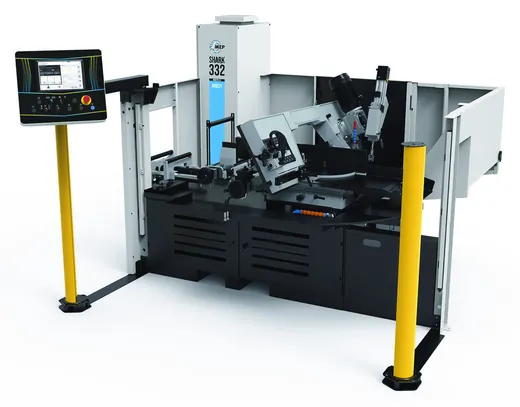
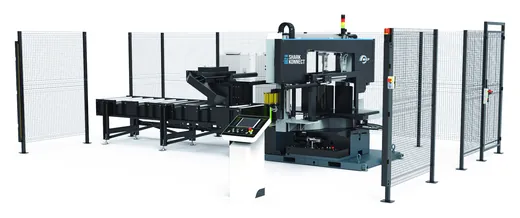
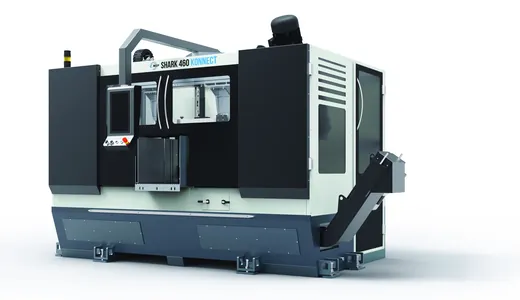
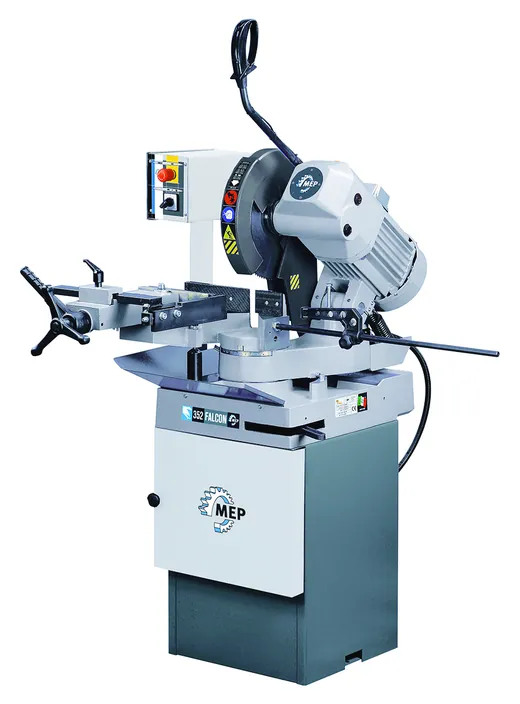
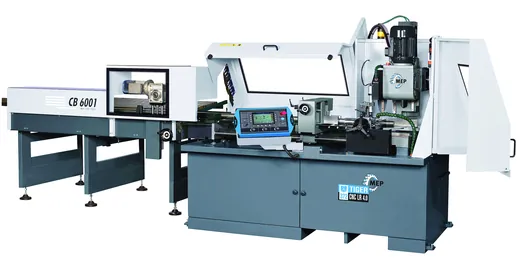
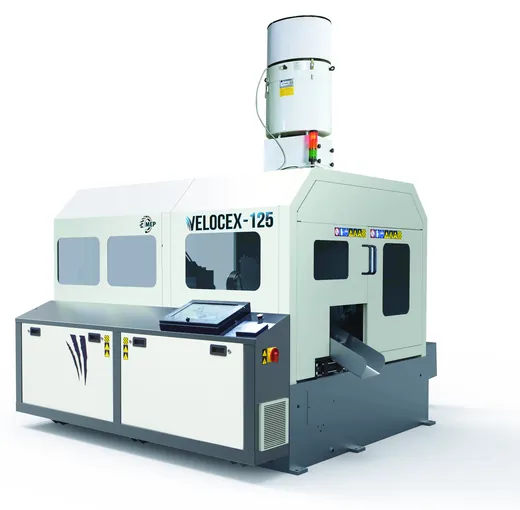
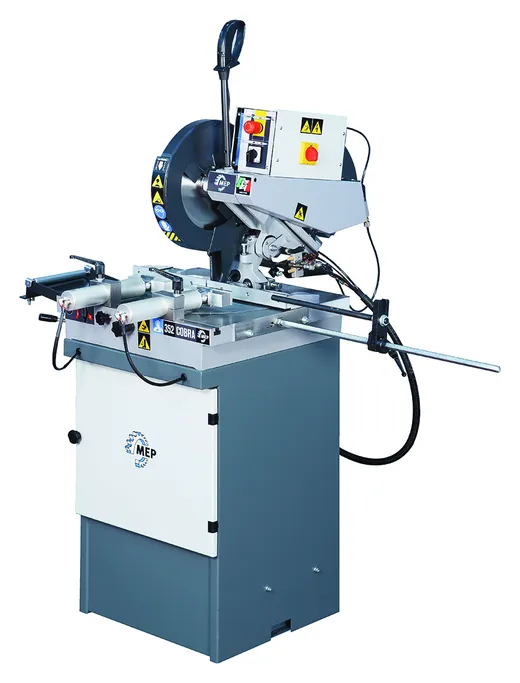
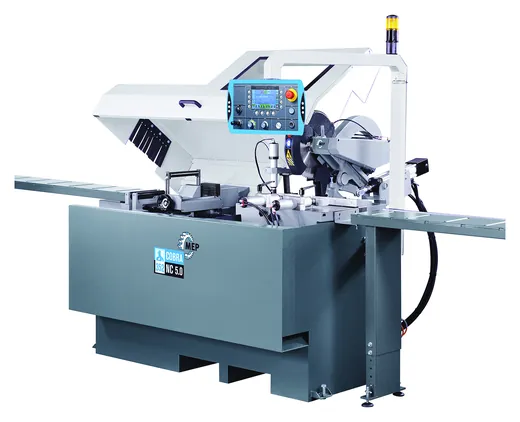
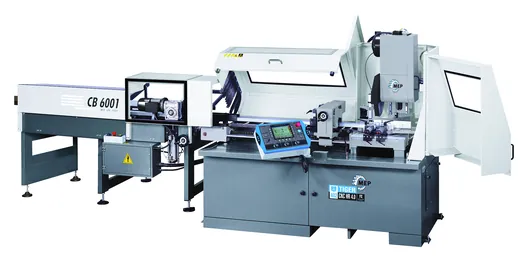
A metal-cutting saw cuts blanks to length from bar, tube, profiles or beams. The LUNA catalog carries two types. A band saw cuts with a thin blade joined into a loop: the kerf is narrow and the capacity is large, from Ø180 mm on the manual MEP PH to Ø1020 mm on the twin-column THOR. A circular saw cuts with a rigid blade: the capacity is smaller, up to Ø175 mm, but the cut is fast and clean, especially on tube and light profiles. The circular saws are MEP machines and the automatic BLM GROUP TS72 for tube.
First decide which tool to cut with: it determines which group to look in.
| Type | Capacity at 0° | Best for | In the catalog |
|---|---|---|---|
| Manual band saws | round bar Ø180–Ø300 mm | maintenance shops, stock preparation, one-off cuts of varied stock | MEP PH and SHARK, including CCS versions |
| Semi-automatic band saws | round bar Ø250–Ø1020 mm | identical cuts of tube, profiles and beams, massive round bar and bundles | MEP SHARK SXI EVO and THOR |
| Automatic band saws | round bar Ø230–Ø660 mm | batches from bar stock to programmed lengths | MEP SHARK NC 5.0, DIRECT, KONNECT and HS |
| Circular saws for metal | round bar Ø65–Ø175 mm, tube up to Ø102 mm | fast, clean cuts of steel or aluminium tube and profiles, small-section bar | MEP FALCON, TIGER, COBRA, VELOCEX and BLM GROUP TS72 |
The second question is how much time the operator spends at the saw. On a manual saw they lower the frame or head and clamp the workpiece themselves; the SHARK CCS versions control the frame feed but remain manual. A semi-automatic cuts and returns the frame on its own after the start: the operator only loads the workpiece. An automatic also feeds the bar to the set length and cuts the whole batch to a program. MEP circular saws come in all three versions: manual FALCON, TIGER and COBRA, SX EVO semi-automatics, and NC 5.0, CNC and VELOCEX automatics.
Send the material, largest section, angles and number of cuts per shift — we will select the model and blade and quote delivery and commissioning. For straight cuts in sheet metal, see guillotine shears.
A band saw cuts large sections with a thin blade and a narrow kerf: solid bar, heavy profiles, beams and bundles, up to Ø1020 mm in the catalog. A circular saw cuts faster and cleaner with a rigid blade, but its capacity is smaller, up to Ø175 mm. So batches of tube and light profiles are usually cut on a circular saw, and large sections on a band saw.
Look at the number of identical cuts and whether the operator has to stand at the saw. For varied one-off cuts a manual saw is enough. For many cuts where the operator only loads the workpiece, a semi-automatic. For batches from bar stock to programmed lengths, an automatic with a feeder.
Yes, on models rated –45°…+60° or –60°…+60°. Among band saws these are the PH 262/HB, SHARK 282 and 332-1, SHARK SXI EVO from the 282 up, SHARK 332 DIRECT and both KONNECT models; among circular saws, the FALCON and COBRA (up to ±45°) and the TIGER and TIGER HR (–45°…+60°). The other band saws mitre from 0° to +60° in one direction, and the SHARK HS cut at a right angle only.
The blade size is set by the model and shown on its page. Tooth pitch is chosen for the material, section and wall thickness, and the blade type for the metal: HSS for steel, HM carbide for aluminium. When selecting the saw we will recommend a blade for your workpieces.
The price depends on the model, configuration, blades and equipment, as well as delivery terms, so it is not listed on the site. Send a request and we will prepare a quotation with delivery, commissioning and training.
The material and grade, the shape and largest section of the workpiece, the angles you need, bar and part lengths, and the number of cuts per shift. From this we select the model and quote delivery, commissioning and training.
Send your part parameters — we'll select and quote.