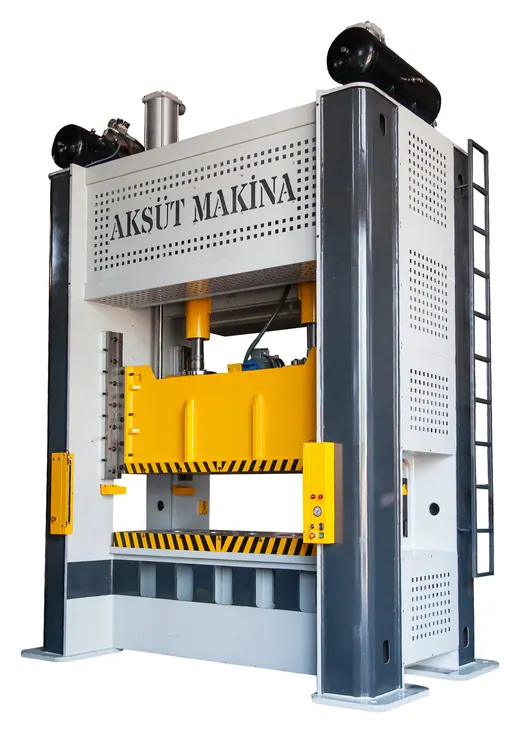
Aksüt Makina
Aksüt ASM200TLP-H
Frame type: HDrive type: Crank type (flywheel)Force: 200 t
PRICE ON REQUESTDetails →
Aksüt, TRtech and NARGESA presses: eccentric from 25 to 600 t, hydraulic up to 2000 t, deep drawing presses and a punching machine.
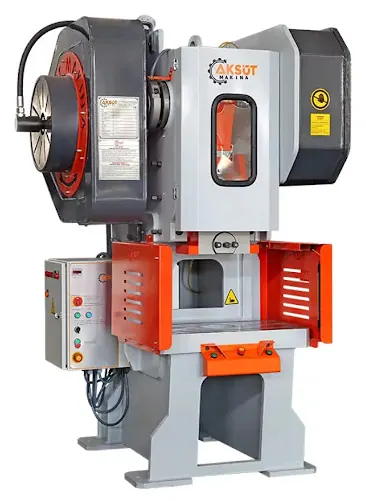
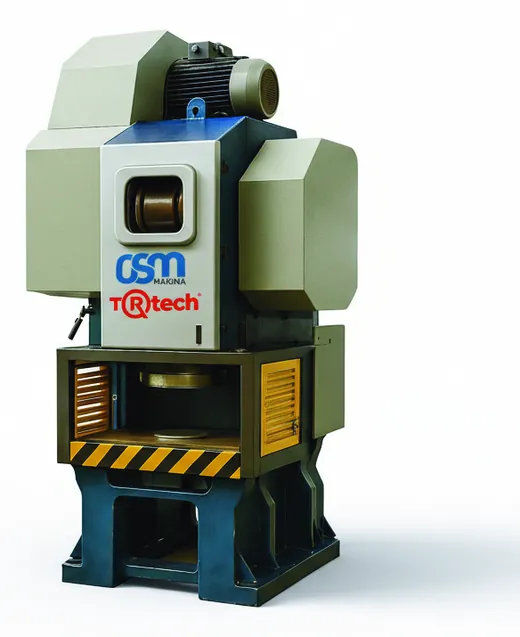
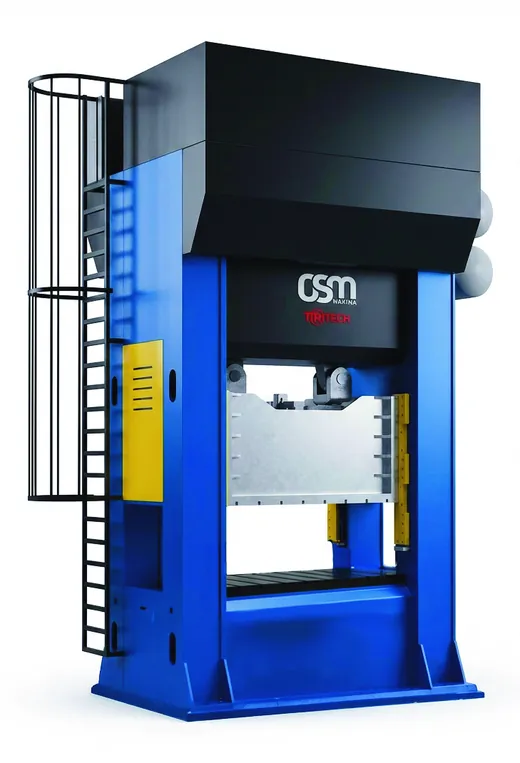
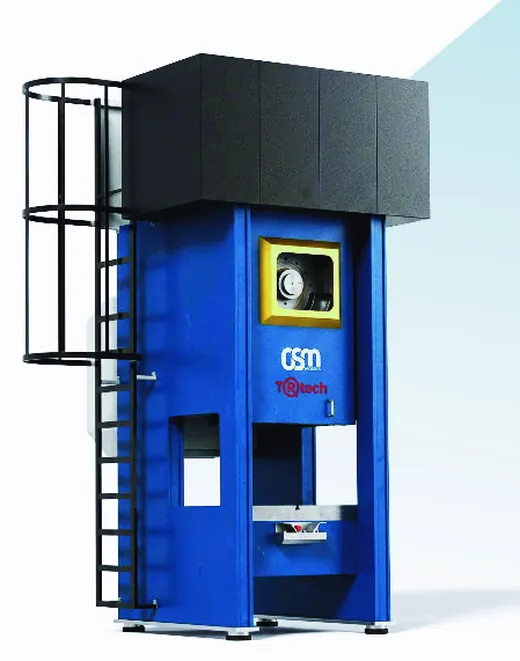
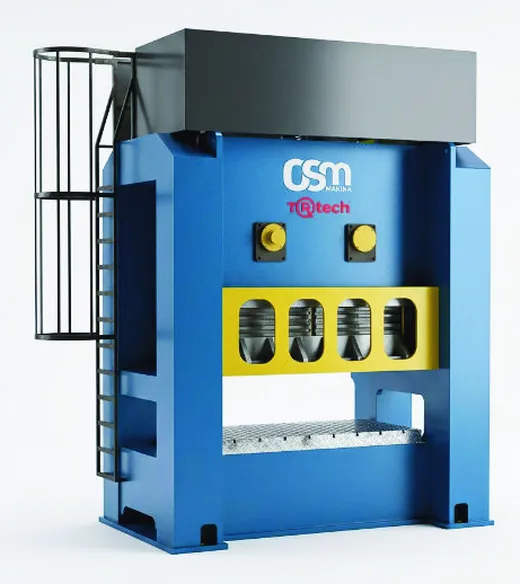
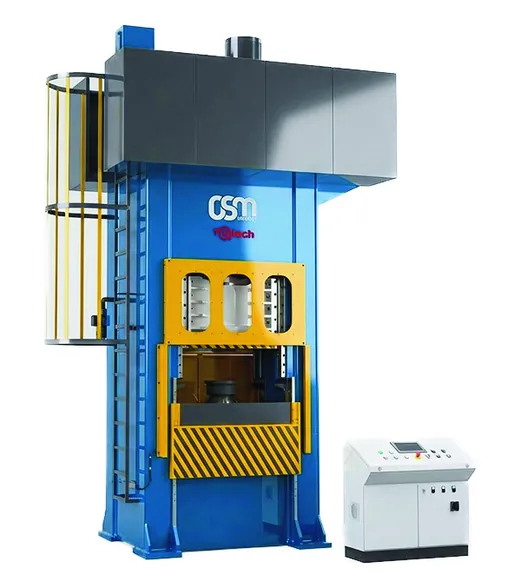
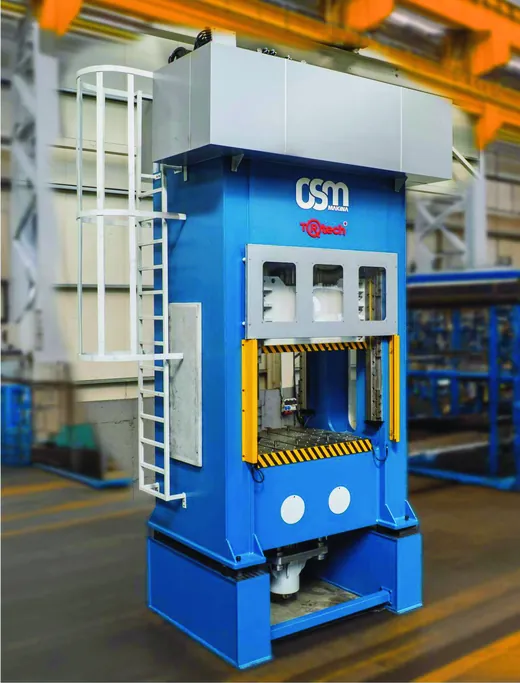
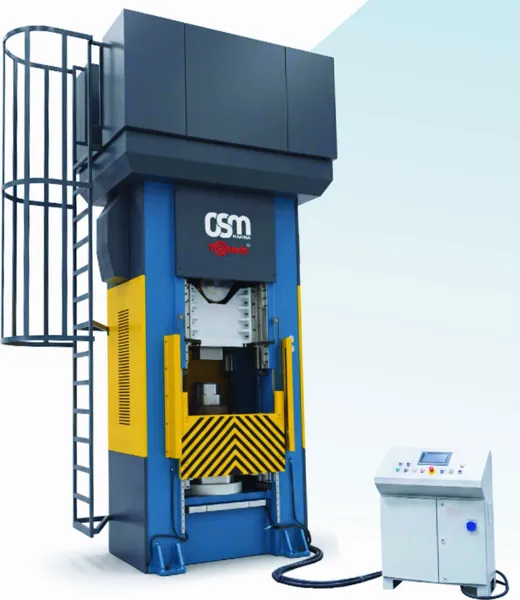
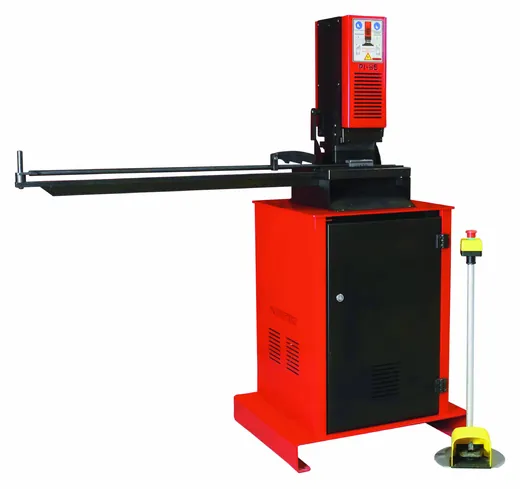
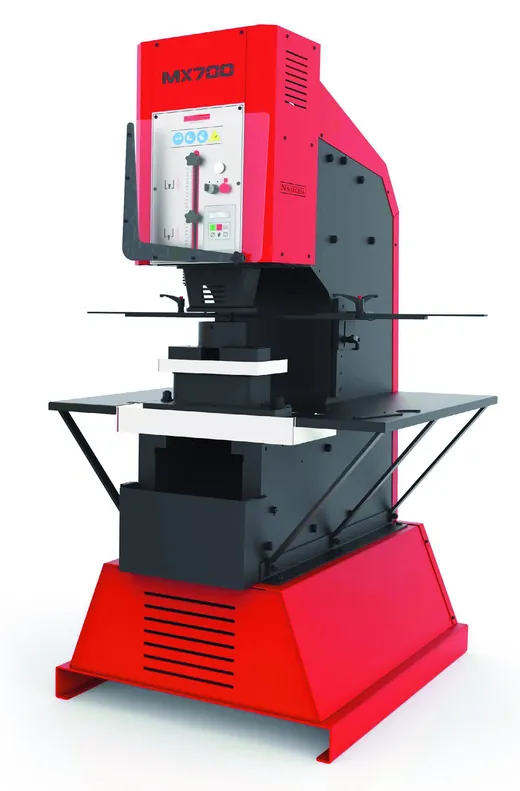
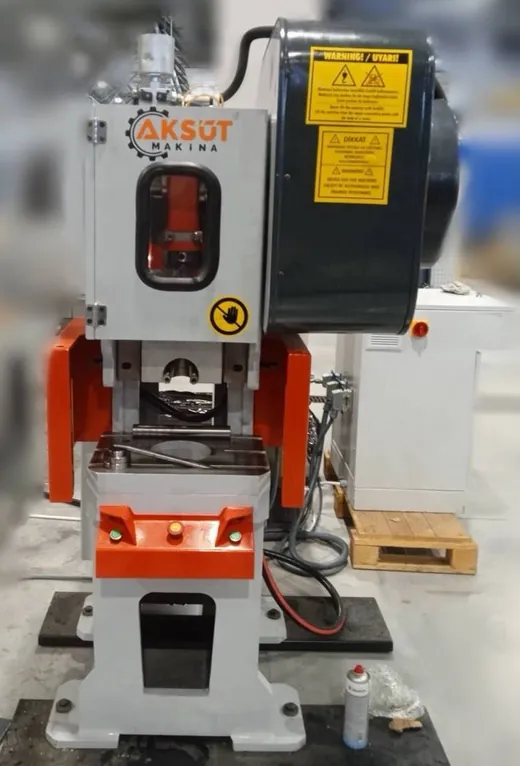
A press is chosen by the operation, not by the tonnage. Blanking, piercing and stamping from strip in series is the job of an eccentric (crank) press: a flywheel stores the energy and the ram completes its cycle in a fraction of a second. Pressing, forming, straightening and deep drawing are the job of a hydraulic press: it is slower but holds full force over the whole stroke and can stop anywhere. The catalog holds 76 presses from two Turkish makers: Aksüt Makina and TRtech by OSM Makina.
| Type | What is in the catalog | Characteristics | Best for |
|---|---|---|---|
| Eccentric | Aksüt ASM 35–500 t; TRtech OEP-C 25–300 t, OEP-H SP and double-point OEP-H DP 125–600 t, closed-frame D-TYPE 80–400 t | up to 150 strokes per minute; rated force near bottom dead centre | series blanking, piercing, stamping from strip |
| Hydraulic | TRtech OHP-H 100–2000 t with a 500–1000 mm ram stroke; the TRtech 300 calibration press with two rams; NARGESA MX multi-purpose presses for 40 and 70 t | full force over the whole stroke, stop at any point, lower speed | pressing, forming, straightening, calibration |
| Deep drawing | TRtech OHP-S 100–2000 t with a cushion of up to 400 t | separate ram and cushion strokes: the blank is held down and the metal flows under control | hollow parts from sheet — housings, vessels, bowls |
Separately there is the NARGESA PI85 punching machine: it makes the holes for the lock body, handle and cylinder in a tube profile for gates and doors, in about 58 seconds per cycle.
Send a drawing of the part, the material and thickness, the quantity per shift and how the blank will be fed — we will select the type of press, the force, stroke and table and discuss dies, the feeder and safety. Blanks are cut on guillotine shears or laser machines, and long parts are bent on press brakes.
An eccentric press is for fast series stamping: tens of strokes per minute, force near bottom dead centre. A hydraulic press is for pressing, forming and deep drawing: full force over the whole stroke and the ability to stop anywhere, but a lower rate. If in doubt, describe the part and the operation and we will suggest the type.
A C-frame is open on three sides: it is easier to set the die and feed strip by hand, and the press is more compact. An H-frame is more rigid — the load goes into two uprights, so it holds large dies and heavy blanking without the ram tilting. The closed-frame TRtech D-TYPE has a solid body, with the die reached through the working window. In the catalog the C-frames run 25–300 t, the H-frames 125–600 t and the closed frames 80–400 t.
Because of the crank kinematics: the force on the ram rises as it approaches bottom dead centre and falls higher up. Makers quote the force at a given distance from the bottom, so for deep drawing or a long working stroke a crank press is selected with a margin.
The price depends on the type, force, frame, stroke, tooling and safety systems, and on delivery terms, so it is not listed on the site. Send a request and we will prepare a quotation including delivery, installation and training.
A drawing of the part, the material and thickness, the strip or blank size, the number of parts per shift, any dies you already have and the feeding method. From this we calculate the force and select a press with its tooling.
Send your part parameters — we'll select and quote.