The 16K20, 1K62, 1A616 and 1M63 still run in hundreds of shops, and the question of replacement comes up not because of age but when worn ways stop holding size, spare parts disappear or the machine no longer keeps up with the schedule. There is no direct equivalent in modern catalogs: Soviet lathes had their own size range. But everything you need for the selection is already in your old data sheet.
What to take from the old data sheet
The name of a Soviet lathe carries its main dimension, but each generation did it differently: in the 1K62 and 16K20 the digits “2” and “20” mean a 200 mm center height, that is a 400 mm swing over bed, while in the 1M63 the “63” is the swing itself, 630 mm. So go by five numbers, not by the name.
- Swing over bed — the largest part that clears the bedways: 320 mm on the 1A616, 400 mm on the 1K62 and 16K20, 500 mm on the 16K25 and 1K625, 630 mm on the 1M63.
- Swing over carriage — what you can actually turn in the chuck: 180 mm on the 1A616, 220 mm on the 1K62 and 16K20, 290 mm on the 16K25 and 1K625, 350 mm on the 1M63. This figure limits the work more often than the first one.
- Distance between centers — the longest shaft: 710 mm on the 1A616, 710, 1000, 1400 or 2000 mm on the 16K20, 750, 1000 or 1500 mm on the 1K625, 1400 and 2800 mm on the 1M63.
- Spindle bore — bar or tube is fed through it: 34–35 mm on the 1A616, 47 mm on the 1K62, 52 mm on the 16K20, 55 mm on the 1K625; 65 mm bar passes through the 1M63 spindle.
- Power and speed — 4–4.5 kW and 9–1800 rpm on the 1A616 (different batches carried different motors), 10 kW and 12.5–2000 rpm on the 1K62, 11 kW and 12.5–1600 rpm on the 16K20, 11 kW and 12.5–2000 rpm on the 1K625, 15 kW and 10–1250 rpm on the 1M63.
Table: old lathe → what to look for in the catalog
| Old lathe | Swing over bed / carriage | Between centers | Power and speed | Closest in the catalog |
|---|---|---|---|---|
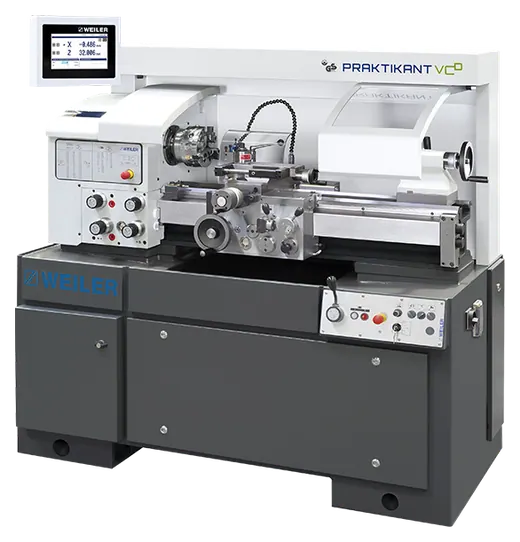
| 1A616 | 320 / 180 mm | 710 mm | 4–4.5 kW, 9–1800 rpm | Weiler Praktikant VCD |
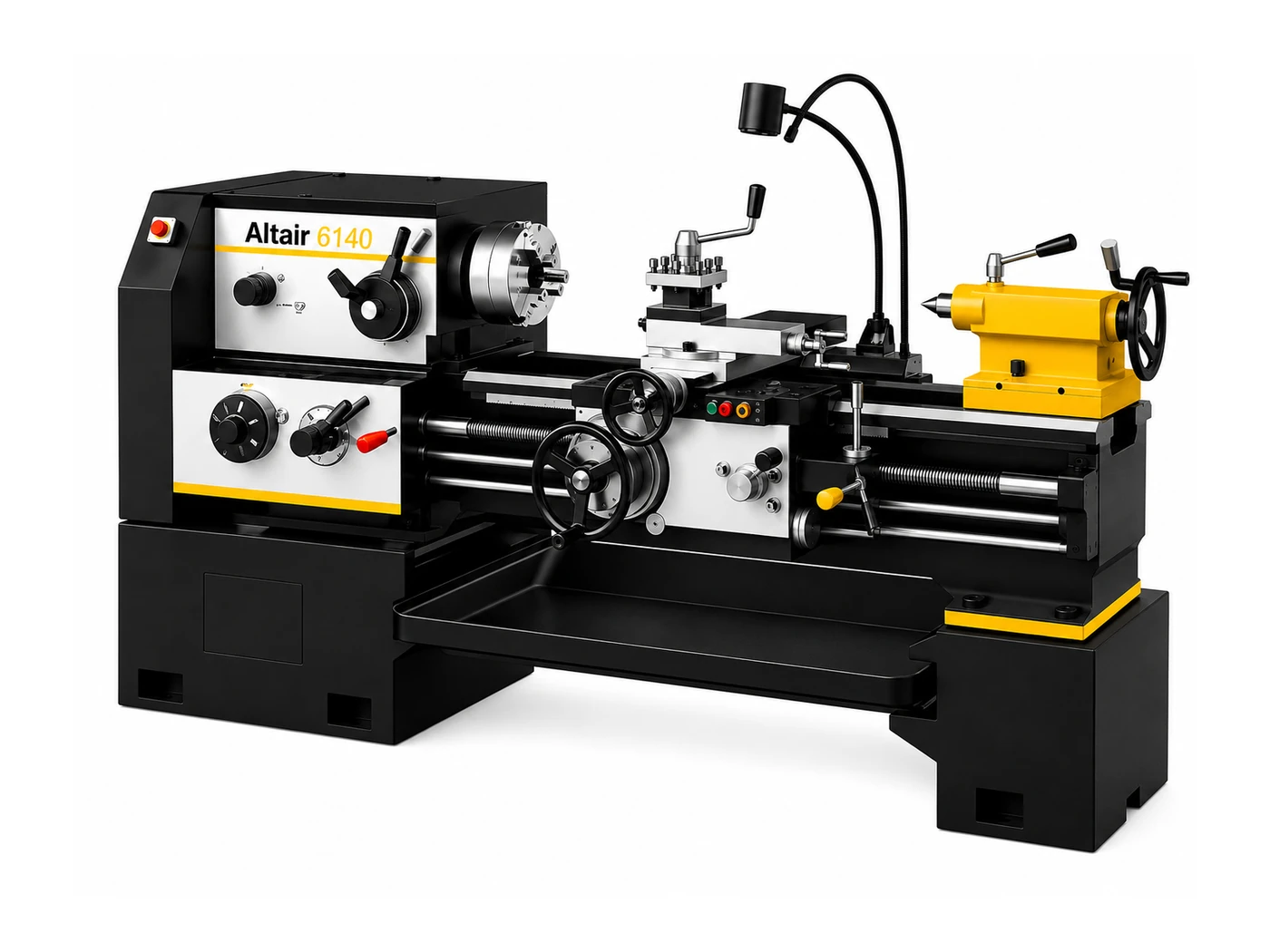
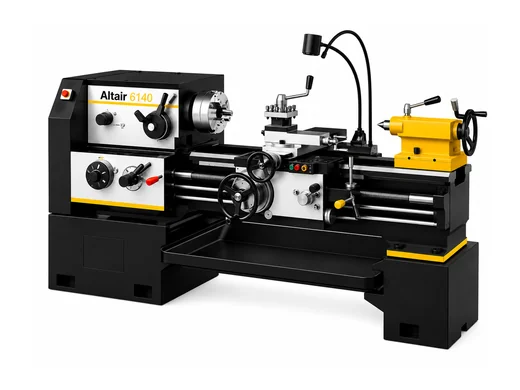
| 1K62 | 400 / 220 mm | 710–1400 mm | 10 kW, 12.5–2000 rpm | LUNA Altair 6140A |
| 16K20 | 400 / 220 mm | 710–2000 mm | 11 kW, 12.5–1600 rpm | LUNA Altair 6140B/A |
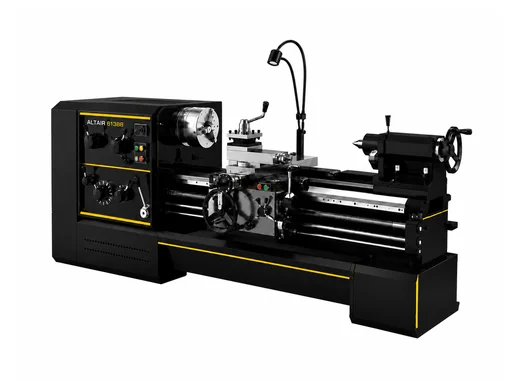
| 16K25 | 500 / 290 mm | 710–2000 mm | 11 kW, 12.5–1600 rpm | LUNA Altair 6150A |
| 1K625 | 500 / 290 mm | 750–1500 mm | 11 kW, 12.5–2000 rpm | LUNA Altair 6150A |
| 1M63 (DIP-300) | 630 / 350 mm | 1400–2800 mm | 15 kW, 10–1250 rpm | LUNA Altair 6163 |
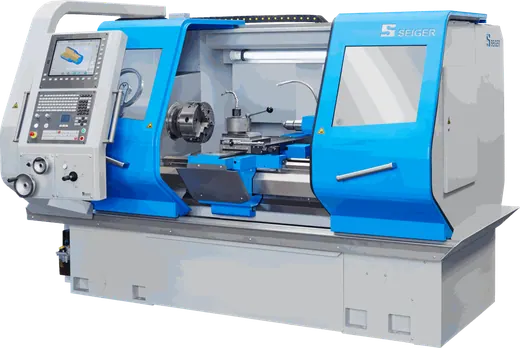
The 16K25 and 1K625 are one size class, so they take the same replacement. The 1A616 is the one row with no exact match: the Weiler Praktikant VCD has the same 320 mm swing over bed but 650 mm between centers instead of 710 and a 43 mm spindle bore instead of 35. If you need the length, look at the Seiger SLZ 300 K: 750 mm between centers with a 300 mm swing. Both are compact and accurate, and both are far more powerful than the original. If your old machine is larger than a 1M63, look at the LUNA Altair 6180 and 61100: 800 and 1000 mm swing and up to 10,000 mm between centers. All the models are side by side in the universal lathes.
Three differences people notice after the swap
- Power. The 16K20 has 11 kW, while the LUNA Altair 6140A with the same swing over bed has 7.5 kW. If you take heavy cuts in steel, choose a machine of the same power class: the Seiger SLZ 420 K has 11/20 kW and the Altair 6163 11 kW.
- Spindle bore. If bar is fed through the spindle, check the bore: the Altair 6140A has 52 mm, the same as the 16K20, while the 6140B/A version has 80 mm. That is the simplest way to widen the range of parts without moving to a larger machine.
- Control. Instead of dials there is a digital readout, and on cycle-controlled and CNC machines there is repeatability too: the part comes out the same on every shift, whoever is at the machine.
Manual, cycle control or CNC
A replacement is a good moment to reconsider not only the size but also the type of control. Three options, from the most familiar:
- A universal lathe — handwheels, mechanical feeds and a lead screw for threading. An operator used to a 16K20 needs no training. It suits repair work and one-off parts.
- A cycle-controlled lathe — the same manual work, but a taper, radius, groove or thread is run by the machine as a cycle the operator sets on the control. No programmer or CAM is needed. A good option when parts repeat in batches of a few pieces: the models are in the cycle-controlled lathes.
- A CNC lathe — for batches: the program is written once and a turret changes the tools. It needs a programmer or a trained setter, but the cycle time is stable and shorter. The models are in the CNC lathes.
What to check before the swap
- Space and floor. A new machine rarely matches the old one in size and weight. Check that it fits through the shop doors and that the floor is level; heavy models need a foundation to the maker’s drawing.
- Power supply. Compare the new machine’s rating with your existing supply: 22 kW instead of 11 kW means a different cable and a different breaker.
- Installation and levelling. The machine is levelled, and a long one along the whole bed. Without that you will not get the accuracy you paid for.
- Tooling. Chucks, steady rests and tool posts from the old machine usually do not fit: the spindle nose and the tool post mounting are different. Budget for tooling together with the machine.
- Steady rests. If long shafts were turned on the old machine, check that fixed and travelling steady rests are included and what diameter range they cover.
- Training. A universal lathe needs only a briefing; for cycles and CNC allow for operator training, otherwise the new machine will be run like the old one.
Repair or replace
An overhaul makes sense while the bed and spindle are sound: the ways, bearings, screws and electrics are replaced and the machine runs for years more. Replacement is the better choice when:
- the size drifts along the length of the part and the ways have already been scraped;
- spare parts are unavailable, or the wait is longer than the downtime you can afford;
- you need repeatability from part to part rather than from the turner’s experience;
- the shop is moving to batches, and cycle time matters more than versatility.
Equipment from the catalog
Questions and answers
Is there a direct equivalent of the 16K20?
There is no direct one. The closest by swing over bed are the LUNA Altair 6140A and 6140B/A: 400 mm, as on the 16K20, and 650 to 1900 mm between centers. The differences are power — 7.5 kW against 11 kW — and the spindle bore: 52 or 80 mm. You can compare all the models in the lathes.
What is a DIP-300?
That was the name of a heavy lathe with a 630 mm swing over bed — the model 163 and its successor the 1M63. “DIP” stands for the Soviet slogan “catch up and overtake”, and 300 is the nominal center height in millimetres; on the 1M63 it is 315 mm, which gives the 630 mm swing. The modern match by size is the LUNA Altair 6163 or the gap-bed 6263.
Will chucks and steady rests from the old machine fit?
Usually not: new machines have a different spindle nose and a different tool post mounting. Check this before buying — tooling has a noticeable effect on the budget.
When is CNC worth it instead of a universal lathe?
When the same part repeats in batches and cycle time matters more than versatility. If the mix of parts changes every time, a universal or cycle-controlled lathe is the better buy: neither needs a programmer. The AI analog finder.