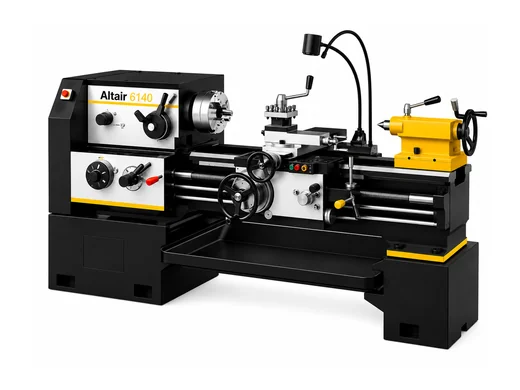
LUNA
LUNA Altair 6140A
Machine type: Universal latheCountry of manufacture: ChinaSwing over bed: 400 mm
PRICE ON REQUESTDetails →
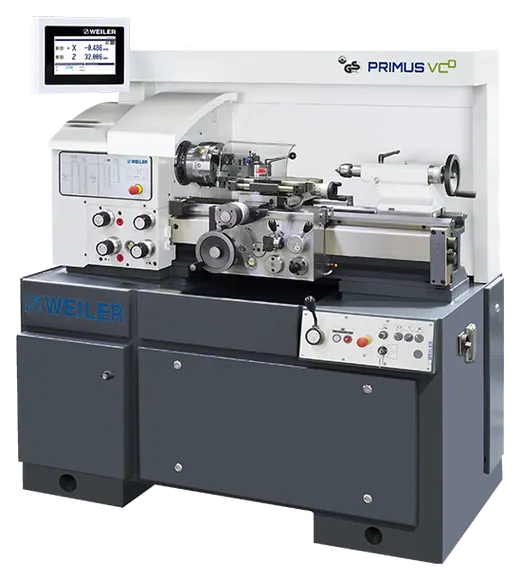
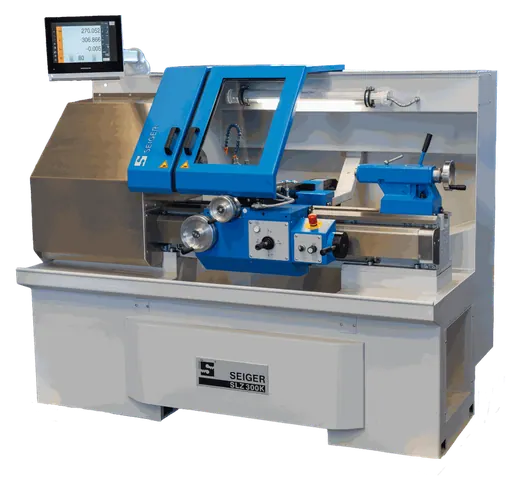
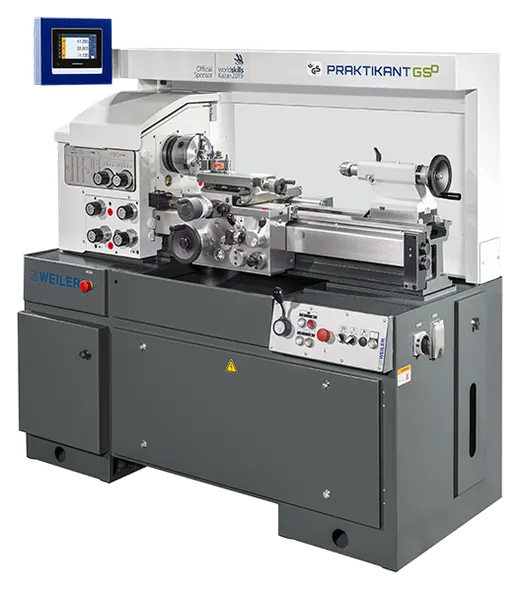
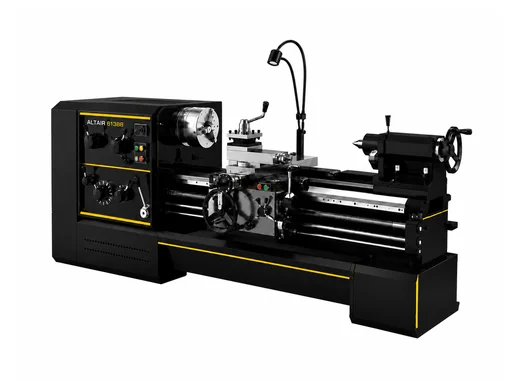
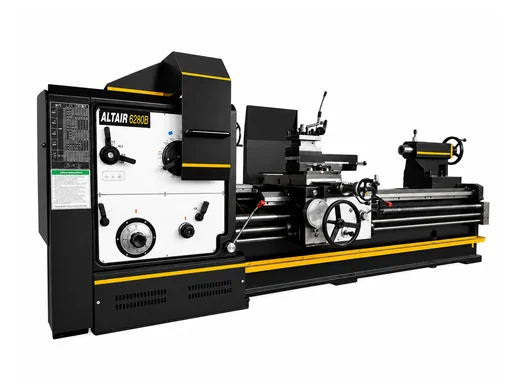
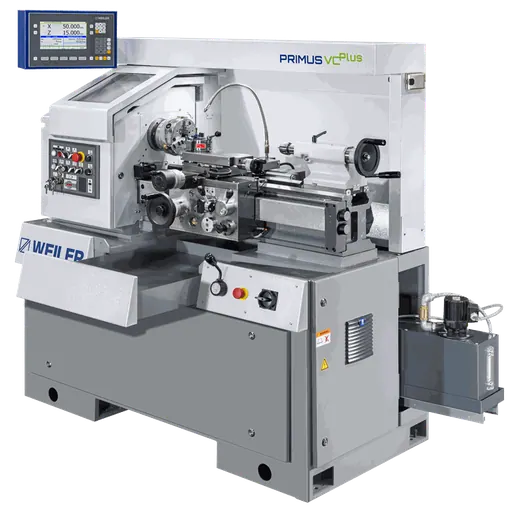
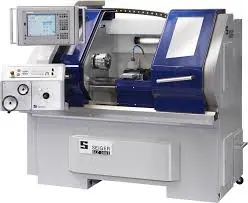
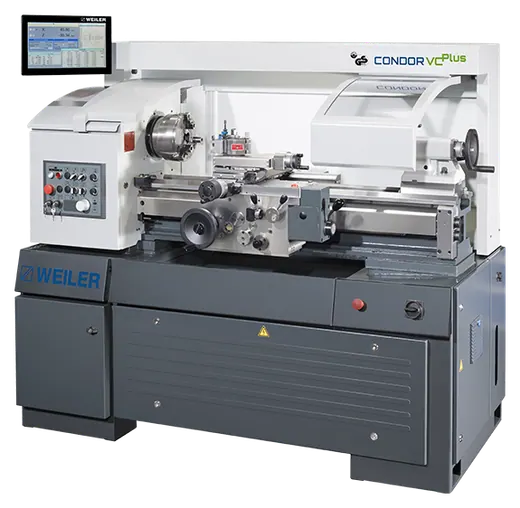
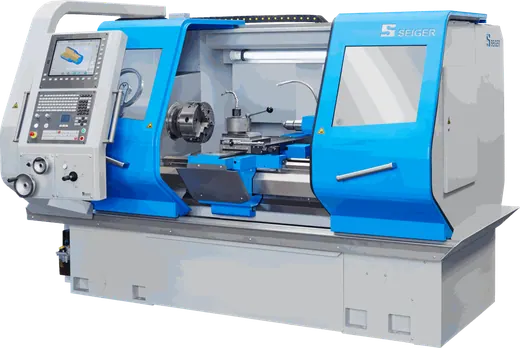
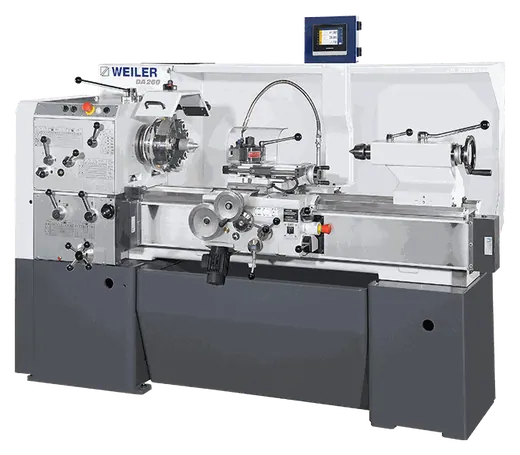
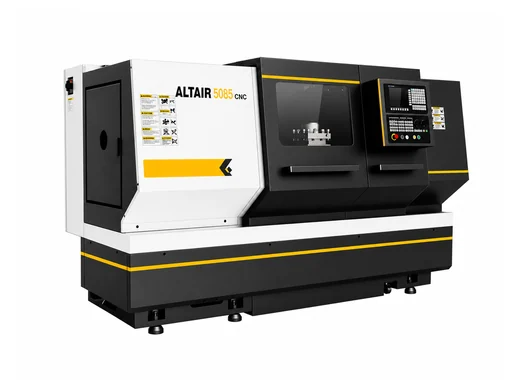
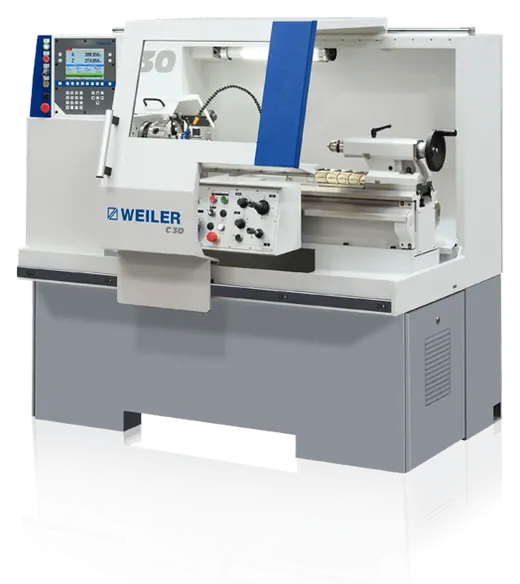
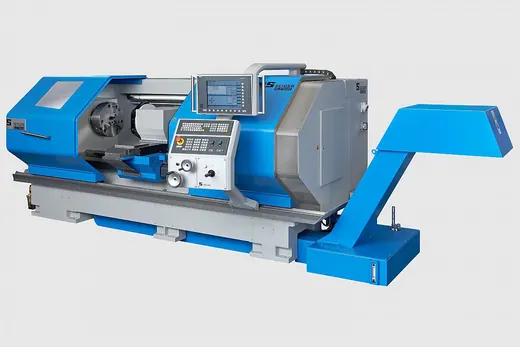
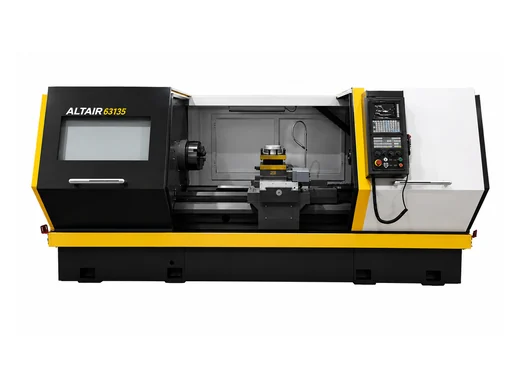
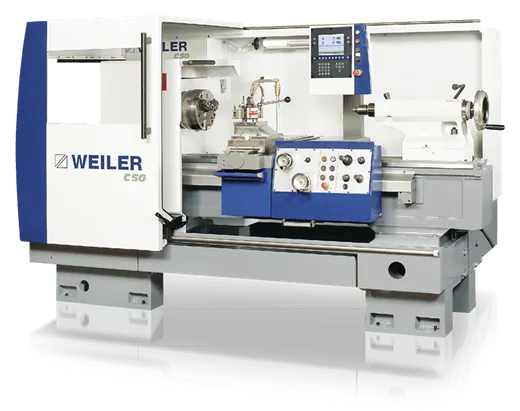
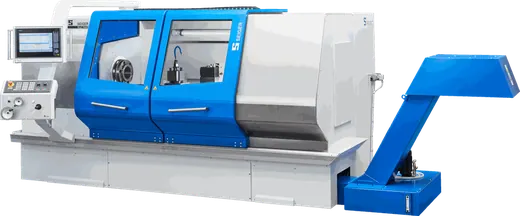
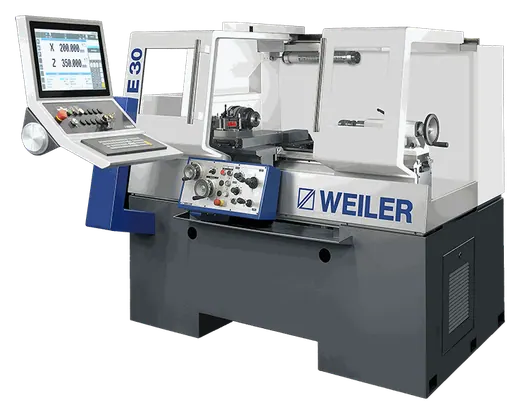
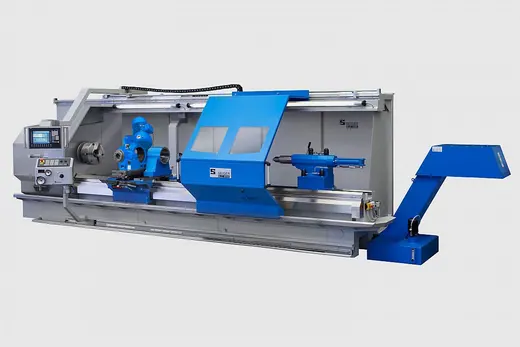
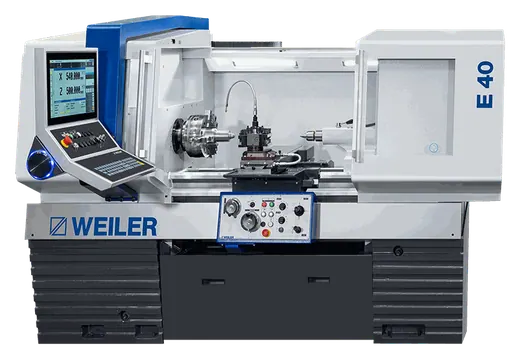
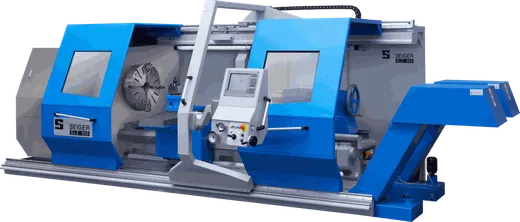
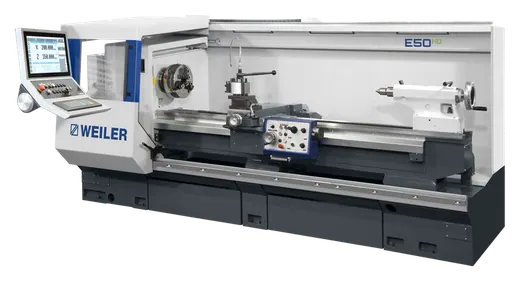
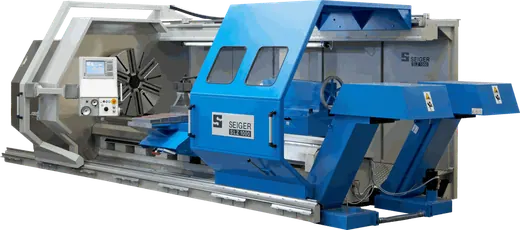
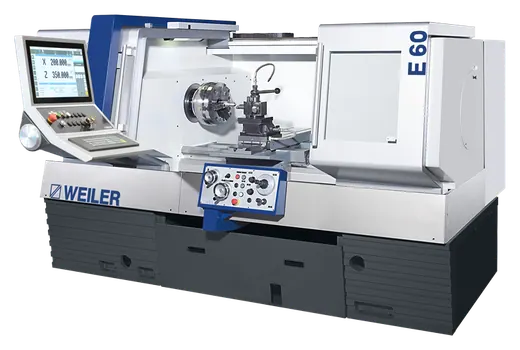
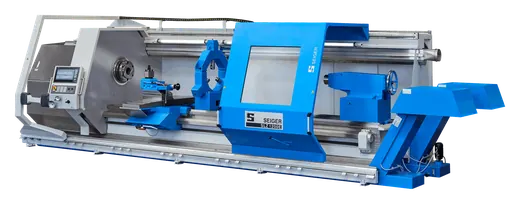
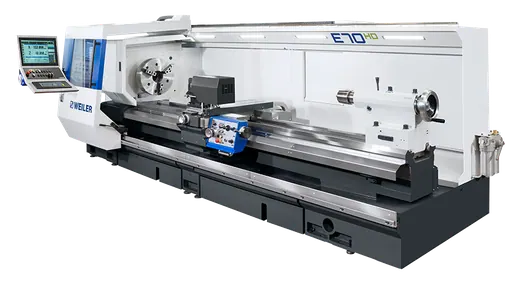
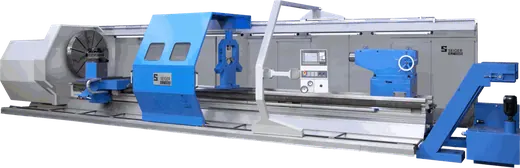
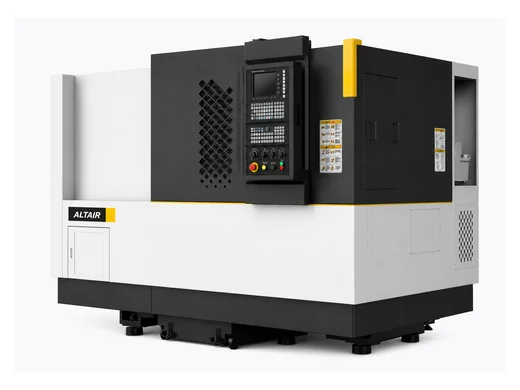
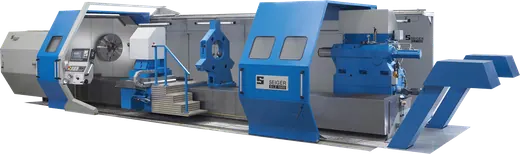
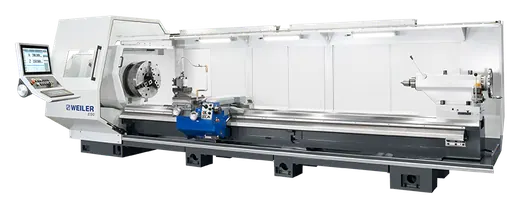
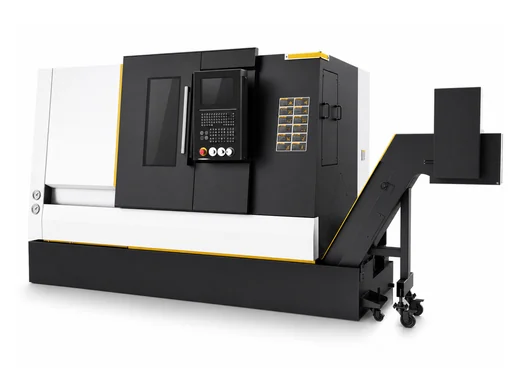
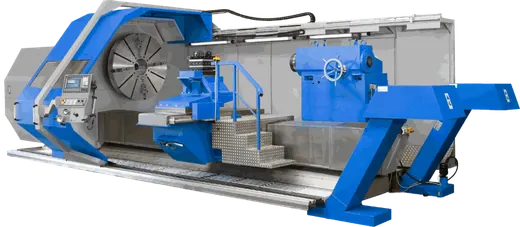
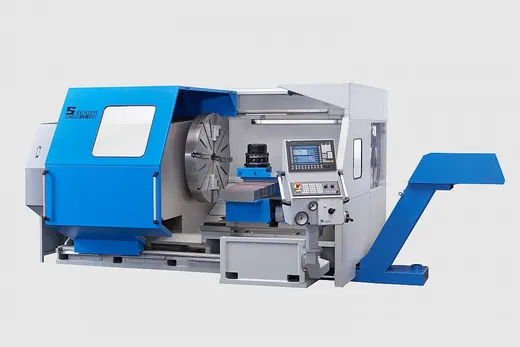
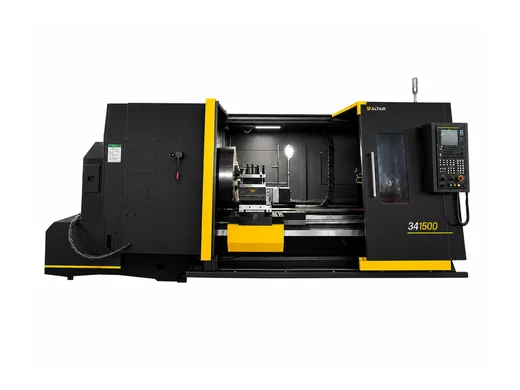
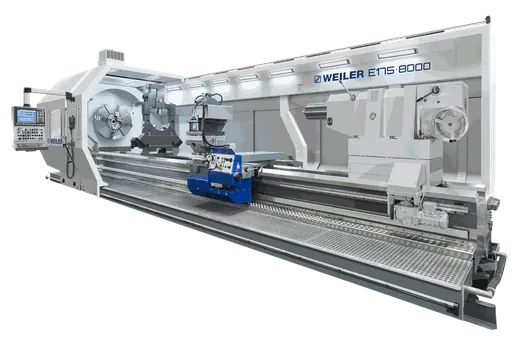
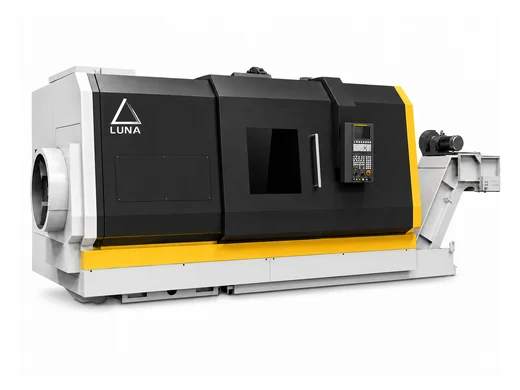
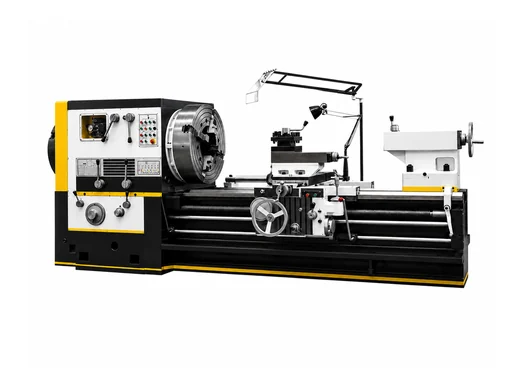
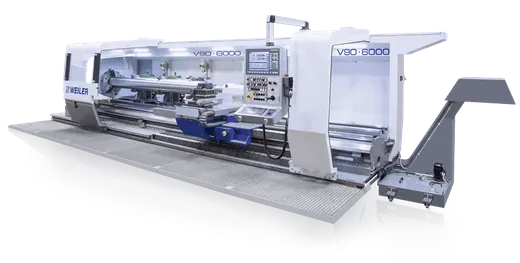
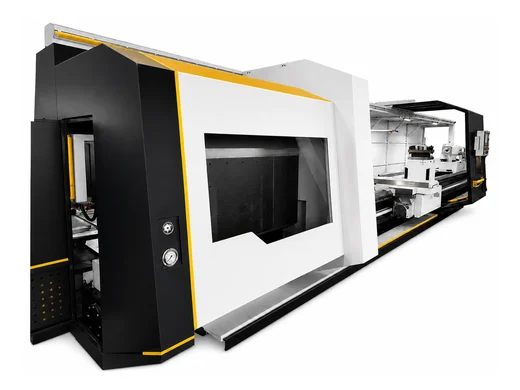
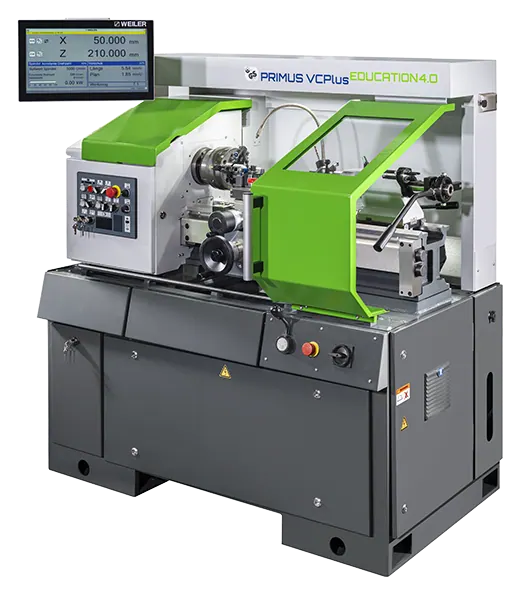
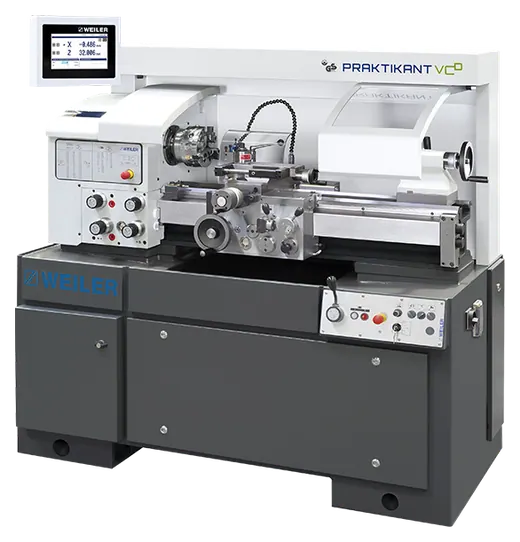
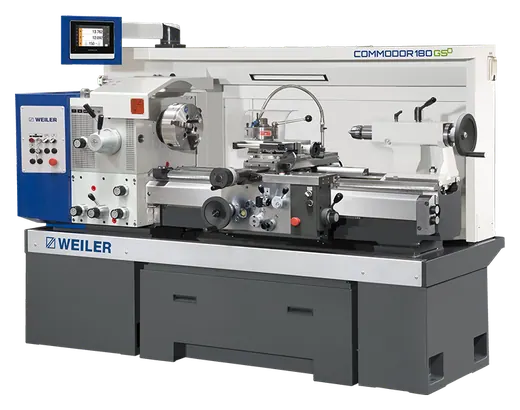
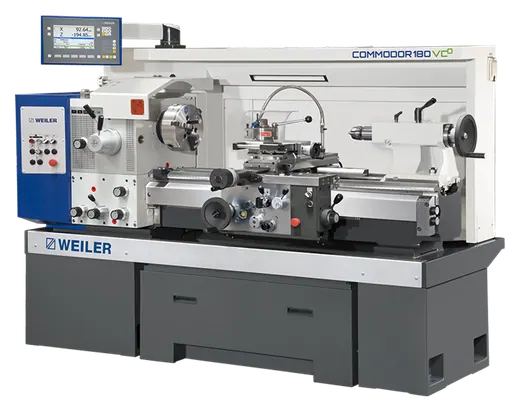
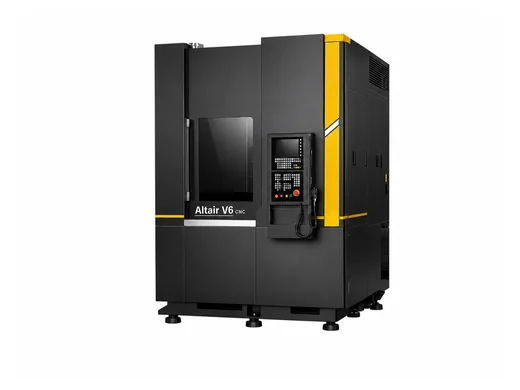
A lathe machines rotational parts — shafts, axles, bushings, flanges, discs and rings: it turns outside and inside diameters, faces, grooves and tapers, cuts threads, and drills and bores on the axis. The catalog carries German Weiler and Seiger machines and machines under our own LUNA brand, made in China: from the compact Weiler Primus with a 280 mm swing over bed and 500 mm between centers to the Weiler E200 and Seiger SLZ 2000 with a 2000 mm swing and up to 16 and 20 m between centers.
The types differ in who drives the carriage — the operator, a cycle on the control or a program — and in how the spindle is positioned.
| Type | Who is in control | Best for | In the catalog |
|---|---|---|---|
| Universal lathes | the operator, by handwheel and mechanical feeds; Weiler and Seiger also offer versions with a digital readout and with servo-driven axes | repair, one-off parts, threads, training | LUNA Altair from 6140A to 61160, Weiler Primus, Praktikant, Condor, Commodor, DA and C, Seiger SLZ K and SK |
| Cycle-controlled lathes | the operator sets up a cycle on the control — a taper, radius, groove, thread or roughing passes — and the machine runs it; simple operations can be done by handwheel | complex one-off parts and small batches without a programmer | Weiler E and V, Seiger SLZ E and SPL face lathes |
| CNC lathes | a CNC program; tools sit in a turret and are indexed by the program | batches, complex contours, heavy shafts | LUNA Altair slant-bed and flat-bed, the heavy Altair 125 series |
| CNC vertical lathes | a CNC program; the spindle is vertical and the part sits on a horizontal chuck | short, large-diameter parts: discs, rings, flanges | LUNA Altair 6I CNC |
| Pipe-threading lathes | a CNC program or the operator; the pipe passes through the hollow spindle | threads on pipe ends up to 340 mm in diameter | LUNA Altair 34100, 34150, 34300, 34S and 262A |
The Soviet 16K20 and 1K62 have a 400 mm swing over bed, the 1M63 630 mm. The same class in the catalog is the LUNA Altair 6140A and 6140B/A at 400 mm and the LUNA Altair 6163 and 6263 at 630 mm. Compare not only the swing but also the distance between centers, spindle bore and power — against your parts, not the old machine’s data sheet. If the old machine makes repeat parts, look at cycle-controlled lathes as well. The AI analog finder helps find a replacement model by the old machine’s name. What to check before the swap is covered in Replacing a 16K20, 1K62 or 1M63 lathe.
Send a drawing or sketch of the part, the material, the largest diameter and length and the monthly quantity — we will select the type and model, chucks and tooling, delivery and commissioning. For faces, slots and prismatic parts, see milling machines; for holes and threads in housings, drilling machines; for finishing shafts after turning, grinding machines.
Mostly, yes. “Screw-cutting lathe” is the Soviet-era classification name for a lathe with a lead screw that cuts threads with a single-point tool. Modern universal lathes are built the same way — in the catalog they are in the universal lathes section: LUNA Altair, Weiler and Seiger SLZ.
A CNC lathe pays off on batches of identical parts: the program is written once and the turret changes the tools. A cycle-controlled lathe is for one-off parts and small batches: cycles are set on the control in conversational mode, with no CAM or programmer, and simple operations are done by handwheel as on a universal lathe.
The price depends on the model, bed length, control and tooling, and on delivery terms, so it is not listed on the site. Send a request and we will prepare a quotation including delivery, commissioning and training.
A drawing or sketch of the part, the material, the largest diameter, length and weight of the workpiece, the accuracy required, the monthly quantity and the control your operators know. From this we select the type, model and tooling.
Send your part parameters — we'll select and quote.