KSP
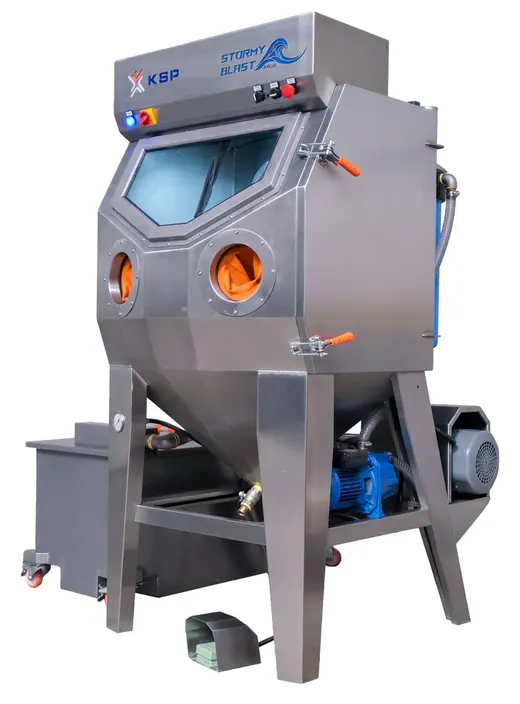
KSP StormyBLAST A800 AQUA
Machine type: Wet blastingSeries: StormyBLASTWorking chamber size: 800 × 750 mm
PRICE ON REQUESTDetails →
KSP StormyBLAST AQUA wet blasting units: abrasive with water removes carbon and rust without dust, with loads up to 150 kg.
In a wet blasting unit the abrasive is carried by water. The water binds the dust, reduces heating and softens the impact of the grain: the surface comes out clean but without deep matting, and there is no cloud of dust in the shop. This is how engine parts, moulds, aluminium and anything where metal must not be eaten away are cleaned.
There are three models in the catalog: the KSP StormyBLAST A800 AQUA with a 100 kg load and 80 + 250 l tanks, and the A1200 AQUA and A1300 AQUA at 150 kg with 300 + 375 and 300 + 400 l. The first figure is the working cabinet, the second the separator where abrasive is separated from the water and returned to the cycle.
If you need dry blasting, there are sandblast cabinets. For oil and coolant no abrasive jet is needed: take a cabinet washer. How to compare washing equipment is covered on the washing machines.
| Model | Type | Load | Tanks |
|---|---|---|---|
| KSP StormyBLAST A800 AQUA | Wet blasting | 100 kg | Cab. 80 + Separ. 250 l |
| KSP StormyBLAST A1200 AQUA | Wet blasting | 150 kg | Cab. 300 + Separ. 375 l |
| KSP StormyBLAST A1300 AQUA | Wet blasting | 150 kg | Cab. 300 + Separ. 400 l |
There is no dust, less heating and a gentler effect on the metal: the part is cleaned but the geometry and size barely change. Dry blasting is more aggressive and faster on thick scale, but it needs serious extraction.
Yes — that is one of the reasons wet blasting is chosen: with the right abrasive and pressure, carbon comes off without eating the surface. The exact settings are found on a trial part, so send a sample or a photo.
Send your part parameters — we'll select and quote.